Week 9: Rooted Flow Yoga Sequence
This week’s sequence focuses on connecting breath to movement while cultivating a sense of grounding and inner safety. Cat–Cow gently mobilizes the spine, helping to release stiffness, improve circulation, and synchronize breath with fluid motion. Low Lunge opens the hips and chest, building subtle strength while encouraging balance between expansion and stability. Child’s Pose brings the practice inward, allowing the nervous system to settle as the breath deepens into stillness. Together, these poses support spinal health, emotional grounding, and mindful presence—making this sequence perfect for restoring calm while staying gently connected to the body.
This asana sequence is designed for beginners.
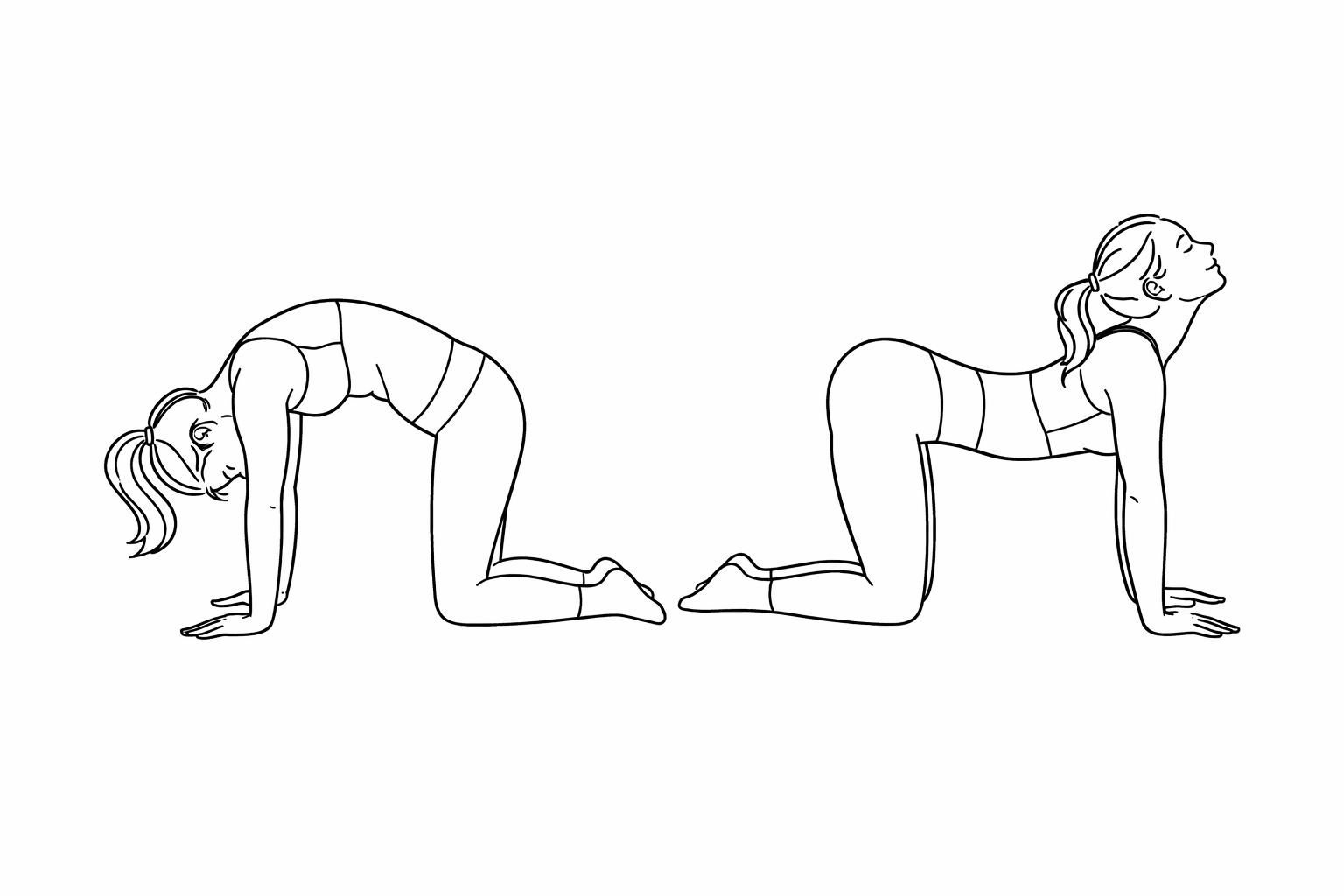
Cat–Cow (Marjaryasana–Bitilasana)
How to do it (step by step):
Start on hands and knees (tabletop). Wrists under shoulders, knees under hips. Spread your fingers wide.
Find neutral spine: imagine a long line from the crown of your head to your tailbone.
Inhale — Cow: Tilt your pelvis back so your sit bones lift, belly softens, chest gently moves forward, and you lift your heart. Let your gaze come up slightly (keep your neck comfortable).
Exhale — Cat: Press the floor away, round your spine up toward the ceiling, tuck your tailbone, and draw your belly in. Let your head relax.
Keep moving slowly: inhale to open, exhale to round for 5–8 cycles.
Finish by returning to a neutral spine and taking one steady breath.
Breath cue: Inhale—open the chest. Exhale—round and release.
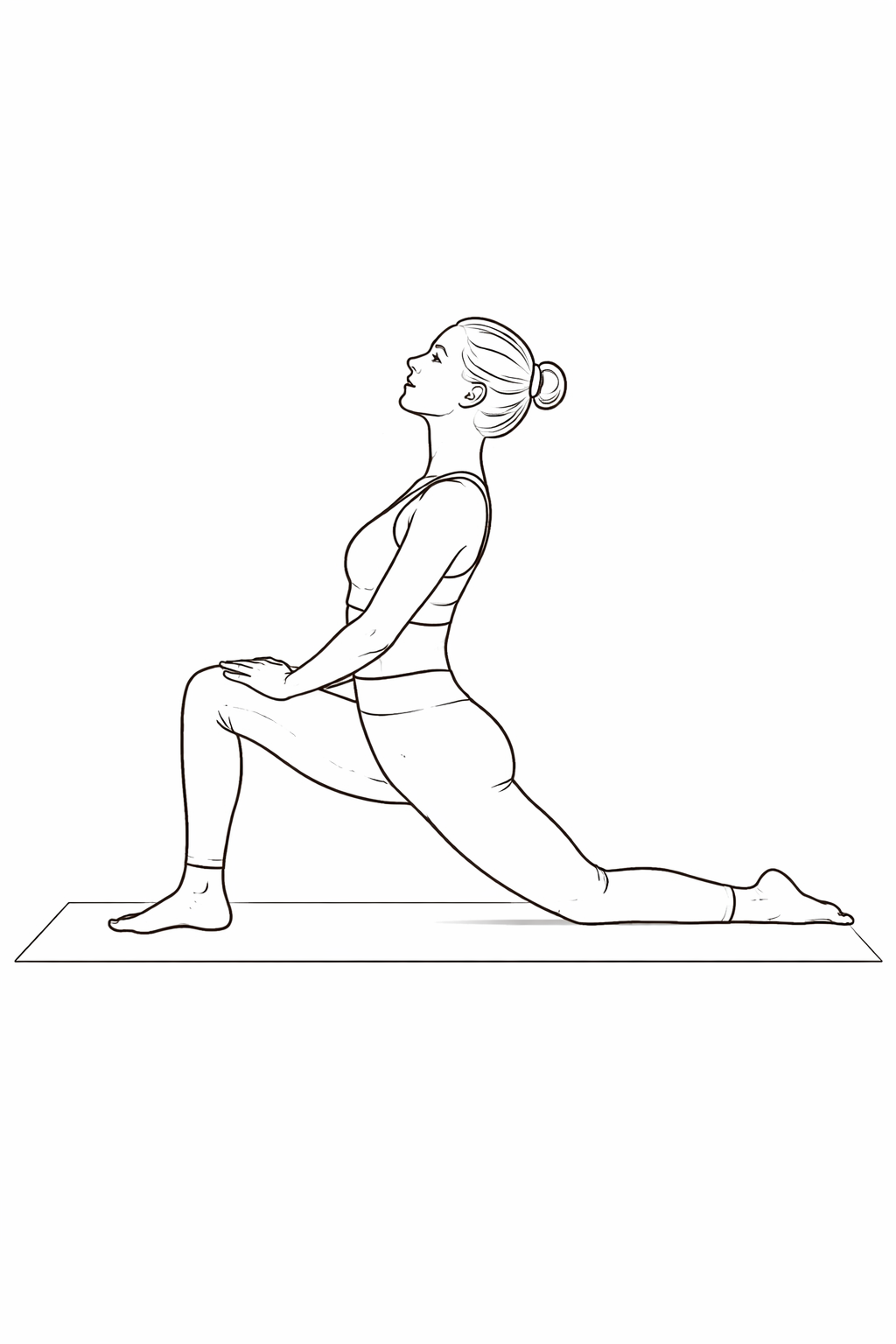
Low Lunge (Anjaneyasana)
Step-by-step
Start in a Downward Dog or Tabletop.
Step your right foot forward between your hands. (Use your hand to help place it if needed.)
Lower your left knee to the mat. Untuck or tuck your back toes—choose what feels steadier.
Slide your right foot forward a touch and let your hips sink forward and down until you feel a stretch in the left hip flexor/front thigh.
Bring your torso upright. Place your hands on your front thigh or hips.
Inhale: lift through your chest, roll your shoulders back and down.
Exhale: soften the ribs and sink into the hips (without collapsing—stay long through the spine).
Optional: reach arms overhead with shoulders relaxed, or keep hands on the thigh for support.
Hold 3–6 slow breaths, then switch sides.
Alignment cues
Front knee stacks over the ankle (avoid the knee drifting far past the toes).
Hips face forward as much as comfortable.
Keep a gentle core tone so your lower back doesn’t dump.
Common fixes
If you feel knee discomfort, place a blanket under the back knee.
If the balance is wobbly, keep your hands on the blocks or on the front thigh.
If you feel low-back pinching: tuck the pelvis slightly (think “tailbone heavy”).
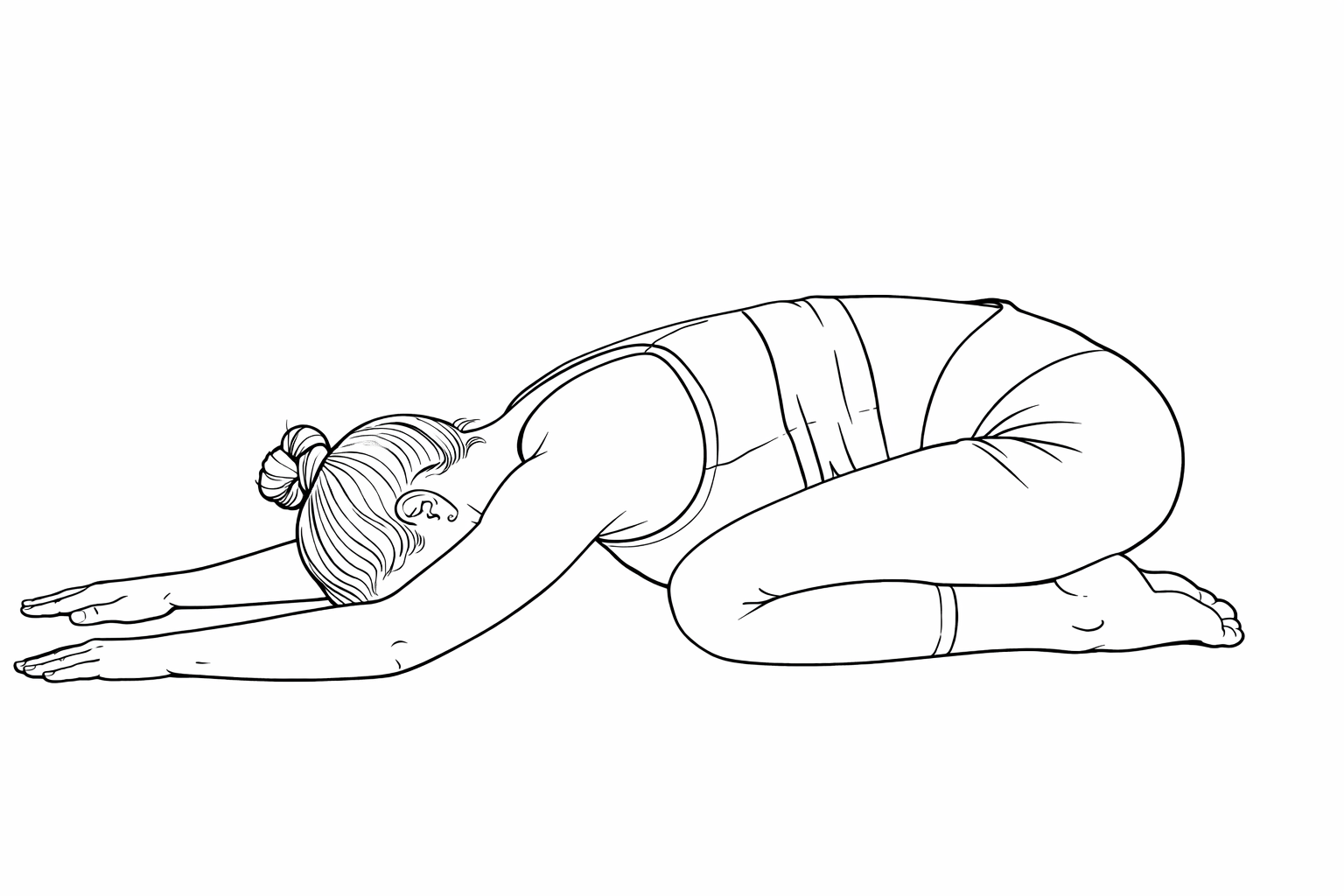
Child’s Pose (Balasana)
Goal: soften your low back, hips, and shoulders while breathing into the back body.
Set up
Come to hands and knees (tabletop).
Bring your big toes together.
Let your knees open wide (or keep them closer if that feels better on your hips).
Fold back
Send your hips back toward your heels.
Walk your hands forward so your arms stretch long.
Land and relax
Rest your forehead down on the mat (or on stacked fists/a pillow).
Let your neck be heavy.
Breath cue
Inhale: imagine your breath expanding into your ribs and upper back (like you’re “breathing into the back of your bra line”).
Exhale: soften your belly, let your hips get heavier toward your heels.
Checkpoints
Shoulders melt away from ears.
No sharp pain in knees/hips.
Breath feels smooth and quiet.
Helpful options
Tight hips: place a pillow/blanket between thighs and calves.
Tight ankles: roll a small towel behind the ankles.
Knee sensitivity: keep knees closer together or pad under knees.