Week 6: Ground & Restore Yoga Sequence
This gentle sequence is designed to bring you back to center—physically, mentally, and energetically. Tabletop Balance builds core stability and focus, helping you feel steady and supported. Cat–Cow moves the spine through flexion and extension, releasing tension, improving mobility, and syncing movement with breath to calm the nervous system. Child’s Pose completes the flow by encouraging deep rest, gentle hip opening, and emotional grounding. Practiced together, this sequence supports stress relief, spinal health, and a sense of safety and ease, making it perfect for mornings to set intention or evenings to unwind.
This asana sequence is designed for beginners.
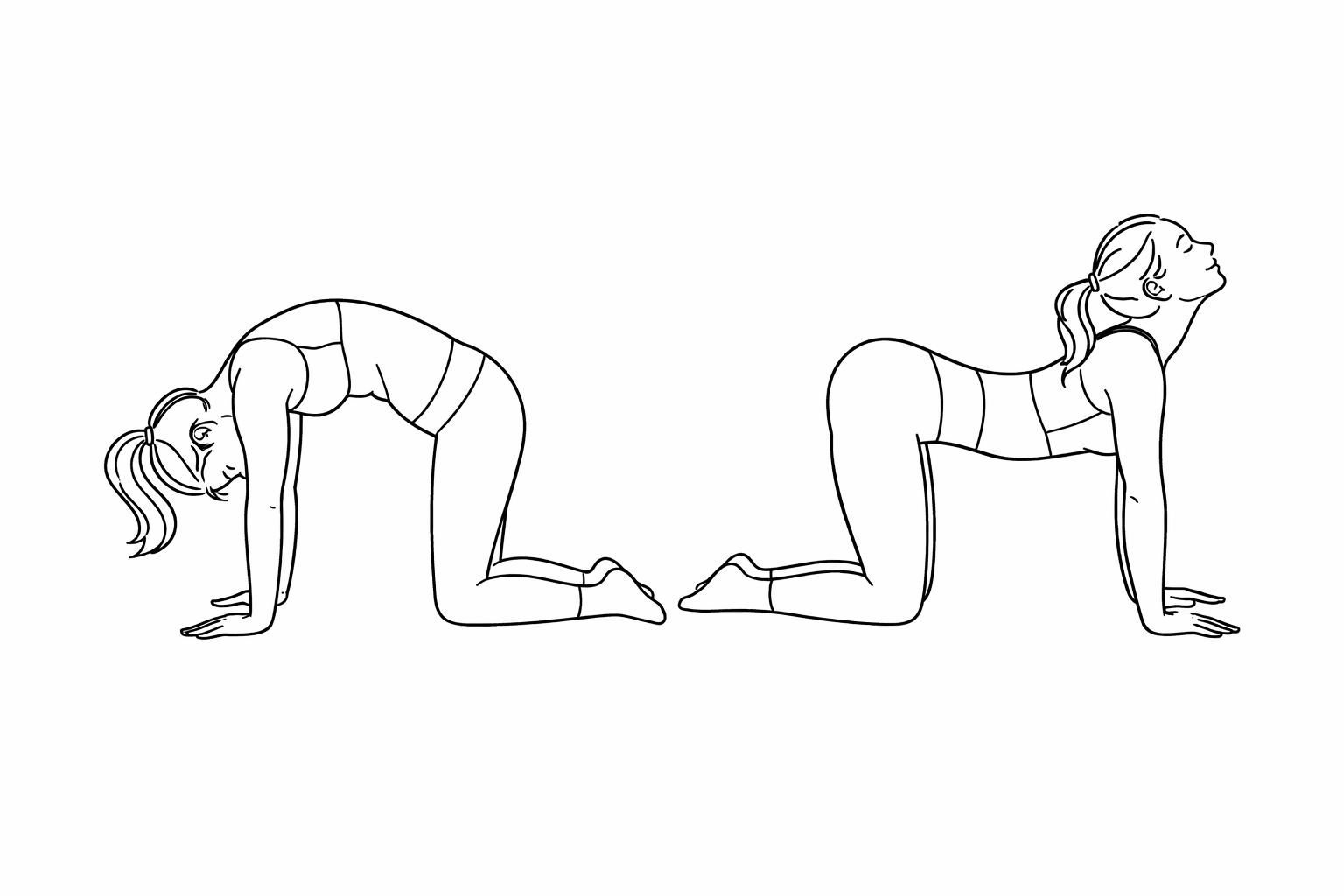
Cat–Cow (Marjaryasana–Bitilasana)
How to do it (step by step):
Start on hands and knees (tabletop). Wrists under shoulders, knees under hips. Spread your fingers wide.
Find neutral spine: imagine a long line from the crown of your head to your tailbone.
Inhale — Cow: Tilt your pelvis back so your sit bones lift, belly softens, chest gently moves forward, and you lift your heart. Let your gaze come up slightly (keep your neck comfortable).
Exhale — Cat: Press the floor away, round your spine up toward the ceiling, tuck your tailbone, and draw your belly in. Let your head relax.
Keep moving slowly: inhale to open, exhale to round for 5–8 cycles.
Finish by returning to a neutral spine and taking one steady breath.
Breath cue: Inhale—open the chest. Exhale—round and release.
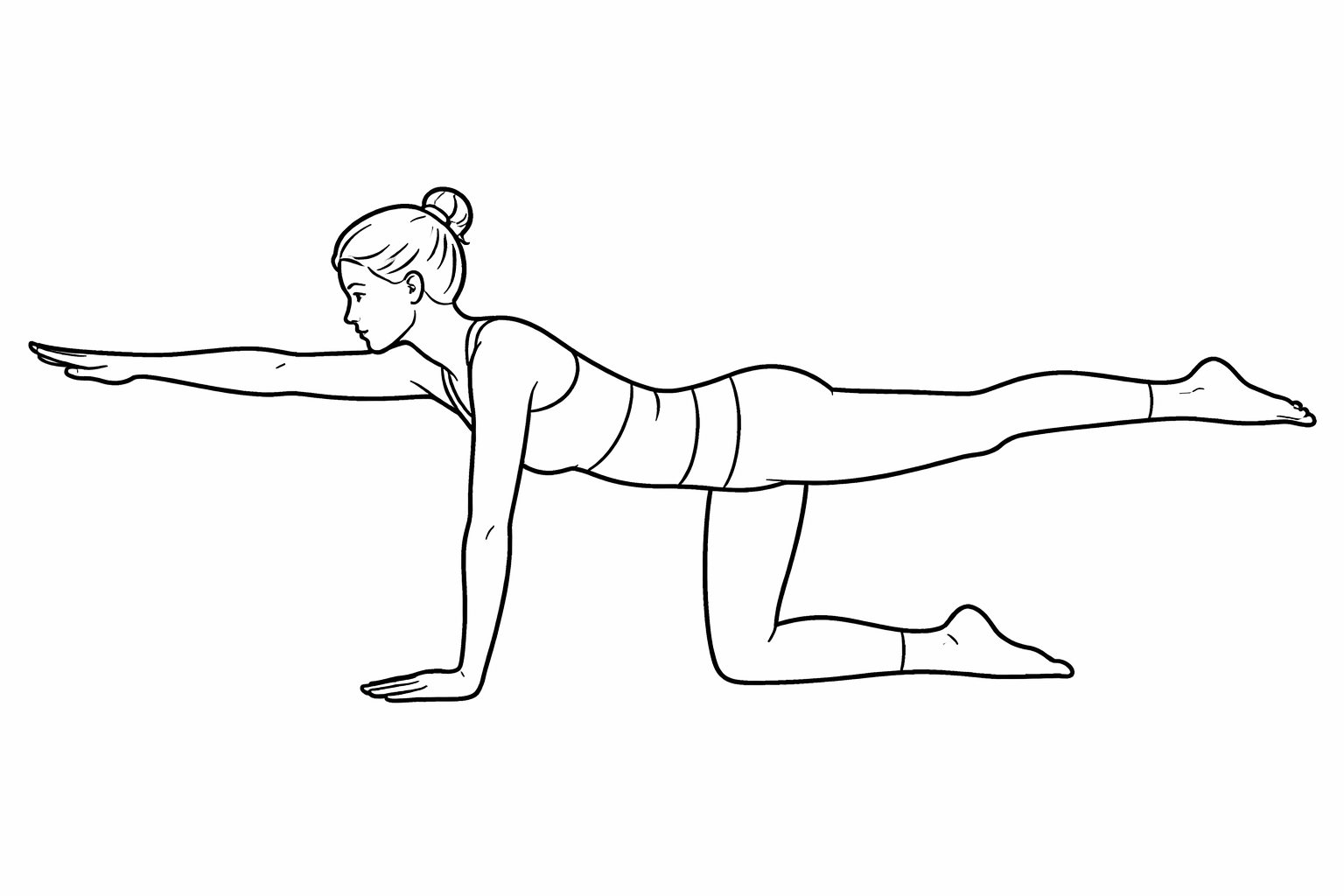
Tabletop Balance — step by step
Start in Tabletop
Hands under shoulders, knees under hips.
Spread fingers wide, press through your knuckles.
Neutral spine: long from the crown of the head to the tailbone.
Set your core + breath
Take a steady inhale to lengthen your spine.
Exhale: gently draw your lower belly in (like tightening a supportive belt), without rounding your back.
Inhale: lift (reach out long)
Keep hips square to the floor.
Option A (classic): extend the right leg back to hip height.
Option B (full): extend right leg back and left arm forward to shoulder height.
Think reach, not lift—get long through fingertips and heel.
Exhale: stabilize (hold steady)
Keep ribs from flaring—hug them in.
Press your standing hand and knee firmly into the mat.
Pelvis stays level (no tipping open), neck stays long (gaze slightly down).
Hold for 3–5 slow breaths
Inhale: lengthen even more.
Exhale: steady your belly and keep your balance.
Return with control
Exhale to lower hand/knee back to the tabletop.
Reset your spine to neutral.
Switch sides
Left leg + right arm, same breath pattern.
Quick form checks (the “feel it in the right places” cues)
You should feel: core + glutes + upper back, not dumping into the lower back.
Imagine a glass of water on your lower back—don’t let it spill.
Common mistakes to avoid
Arching the low back (ribs flaring forward)
Opening the hip to the side
Locking the elbow of the standing arm
Looking forward (cranks the neck)
Easy modifications
Toe-tap balance: extend the leg back while keeping the toes on the floor.
Just legs or just arms: do one limb at a time.
Wider base: slide the standing knee slightly back or widen the knees a bit.
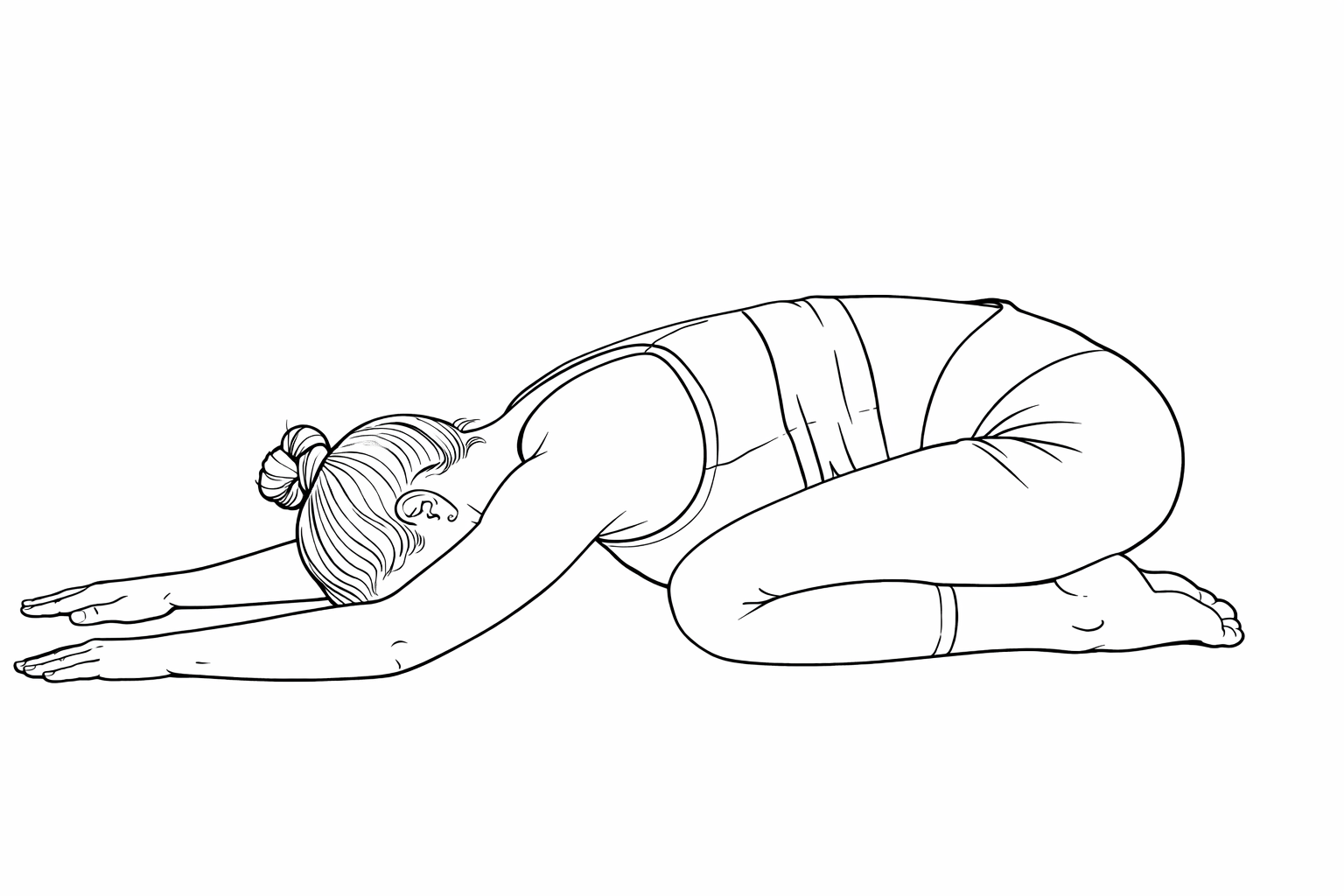
Child’s Pose (Balasana)
Goal: soften your low back, hips, and shoulders while breathing into the back body.
Set up
Come to hands and knees (tabletop).
Bring your big toes together.
Let your knees open wide (or keep them closer if that feels better on your hips).
Fold back
Send your hips back toward your heels.
Walk your hands forward so your arms stretch long.
Land and relax
Rest your forehead down on the mat (or on stacked fists/a pillow).
Let your neck be heavy.
Breath cue
Inhale: imagine your breath expanding into your ribs and upper back (like you’re “breathing into the back of your bra line”).
Exhale: soften your belly, let your hips get heavier toward your heels.
Checkpoints
Shoulders melt away from ears.
No sharp pain in knees/hips.
Breath feels smooth and quiet.
Helpful options
Tight hips: place a pillow/blanket between thighs and calves.
Tight ankles: roll a small towel behind the ankles.
Knee sensitivity: keep knees closer together or pad under knees.