Week 11 Theme: Strong & Grounded
This week’s sequence builds calm strength while encouraging mindful control of the breath. Warrior II cultivates stability and confidence, expanding the chest on the inhale while softening excess tension in the shoulders on the exhale. Extended Side Angle deepens this strength with gentle side-body opening, supporting flexibility and sustained focus without strain. Mountain Pose completes the sequence by regulating the breath and re-centering the body, reinforcing balance and inner steadiness. Together, these poses promote physical resilience, grounded energy, and calm presence—ideal for feeling strong without feeling rushed or overwhelmed.
This asana sequence is designed for beginners.
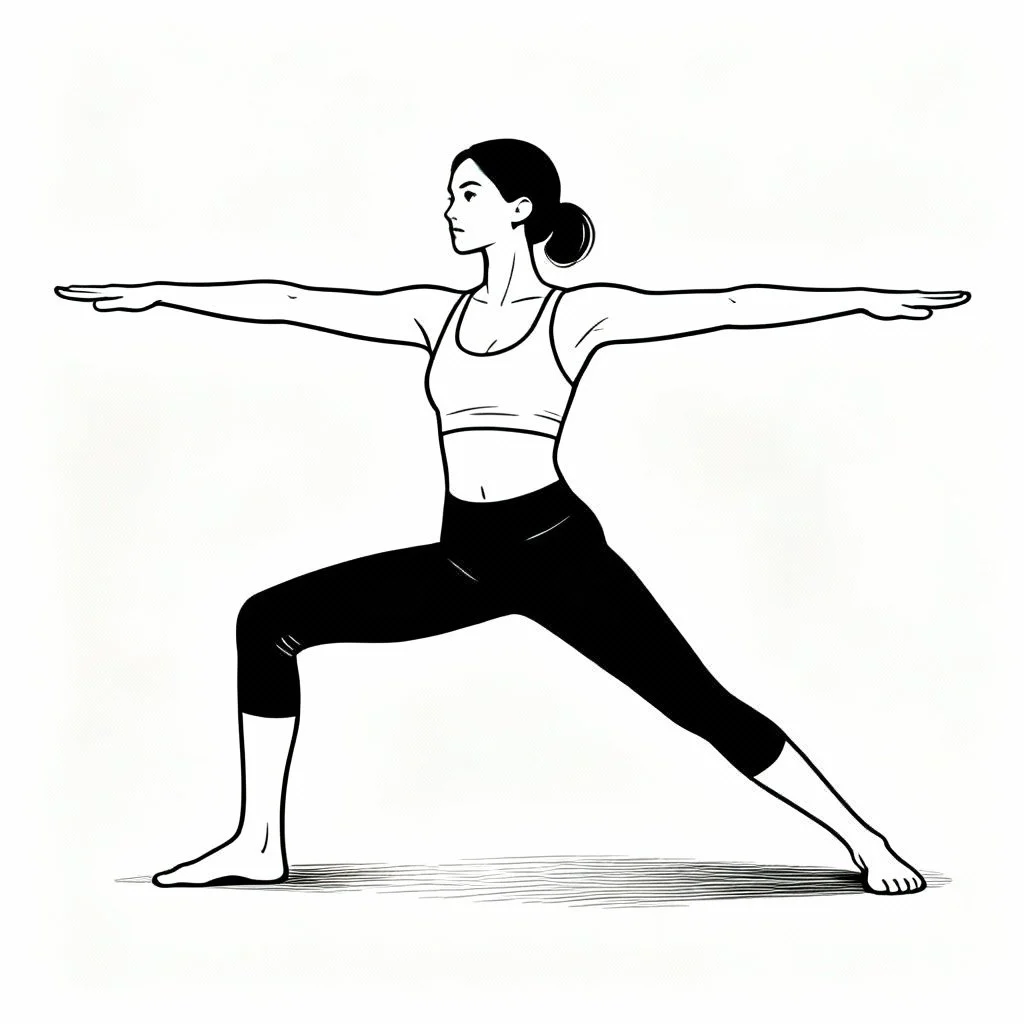
Warrior II (Virabhadrasana II)
Start standing
Stand tall at the top of your mat.
Step your feet wide
Step or jump your feet 3–4 feet apart (wide enough to feel stable).
Turn your right foot out
Turn the right toes to the right about 90°.
Turn the left toes slightly in (about 15–30°).
Line up your heels
Aim for the right heel lined up with the left arch (a good baseline stance).
Bend the right knee
Bend your right thigh until it is moving toward parallel to the floor (only as far as is comfortable).
Keep the knee tracking over the 2nd–3rd toes (not collapsing inward).
Square your hips and settle
Let your hips face the long side of the mat.
Tuck your tailbone slightly so you’re not arching your lower back.
Arms out like a “T”
Lift arms to shoulder height, palms down.
Reach strongly through fingertips, soften shoulders away from ears.
Gaze over the front hand
Look over your right fingertips (or keep gaze forward if your neck is sensitive).
Hold and breathe
Stay for 3–8 slow breaths.
Press into the outer edge of the back foot and keep the back leg strong.
Exit
Inhale: straighten the front leg.
Turn feet back to parallel and step together.
Repeat on the other side.
Quick alignment checklist
Front knee tracks over toes (not caving in)
Back leg straight + engaged
Torso upright (don’t lean forward)
Shoulders relaxed, arms strong
Weight centered (not dumped into front leg only)
Common fixes
Front knee hurts: shorten stance and don’t bend as deeply.
Wobbly: widen stance side-to-side.
Low back tight: slight tailbone tuck + engage low belly.
Shoulders tense: lower arms a bit, and relax traps.
Easier options
Hands on hips instead of arms out
Less bend in the front knee
Shorter stance for more stability
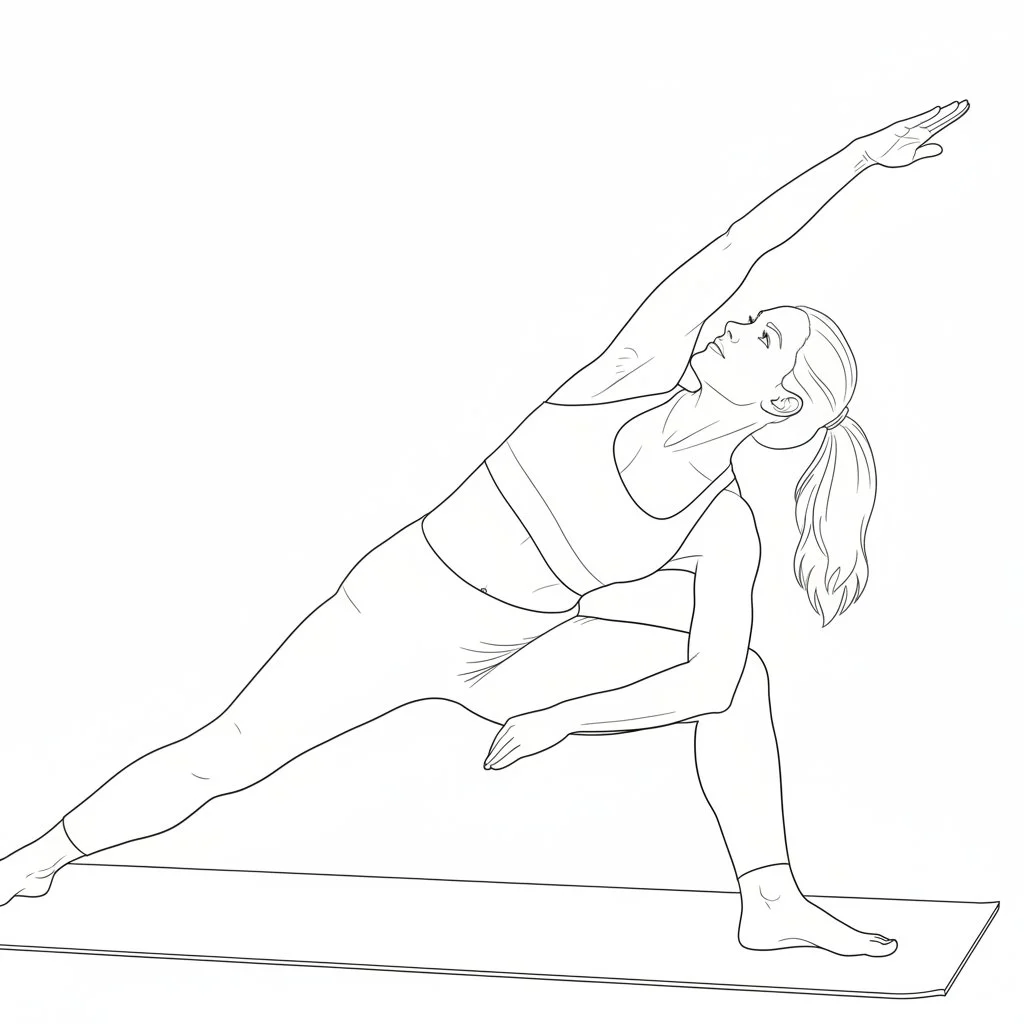
Extended Side Angle (Utthita Parsvakonasana)
Start in Warrior II
Feet wide.
Front foot turned out 90°, back foot slightly in.
Front knee bent, tracking over toes.
Arms in a “T.”
Inhale: lengthen your spine
Grow tall through the crown of your head.
Keep your ribs stacked over your hips.
Exhale: lower your front forearm to your thigh
Bring your front forearm to rest lightly on the front thigh (not pressing down hard).
Keep the front knee bent and stable.
Extend your top arm overhead
Sweep your top arm up and over your ear.
Palm can face down or inward—choose what feels best.
Create one long line
Reach from your back heel through your fingertips.
Think: “long on both sides,” not collapsed.
Open your chest
Roll your top shoulder back so your chest turns slightly upward.
Keep the bottom side waist lifted (avoid sinking into the front hip).
Check your base
Press firmly into the outer edge of the back foot.
Keep the back leg strong and straight.
Gaze
Look up under your top arm if comfy.
Or keep your gaze forward/down to protect your neck.
Hold and breathe
Stay for 3–8 slow breaths.
Exit
Inhale: press into feet, lift torso back to Warrior II.
Straighten front leg, step in, switch sides.
Two common variations (also “correct”)
Half Extended Side Angle (supported): forearm on thigh (best for most people).
Full Extended Side Angle: bring the bottom hand to a block or the floor inside/outside the front foot (only if you can keep the spine long).
Quick alignment tips
Front knee tracks over 2nd–3rd toes
Lift the bottom side waist (don’t collapse)
Top arm reaches long; shoulders relax
Back foot grounded; back leg active
If something feels off
Front knee pain: shorten stance + bend less.
Low back tight: gently engage core, lengthen tailbone down.
Shoulders/neck tense: keep top hand on hip or reach up instead of overhead.
Can’t reach floor: use a block (your best friend here).
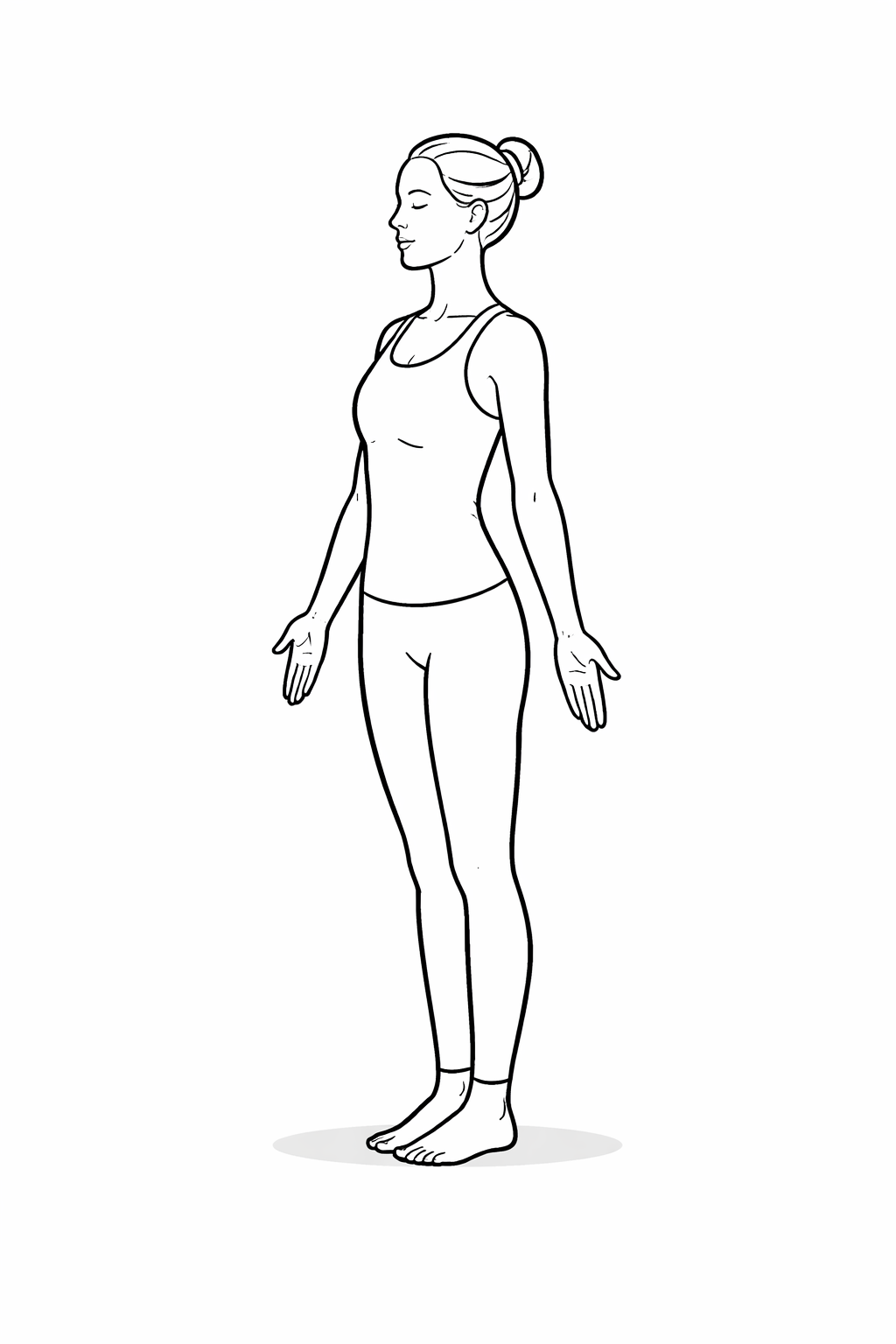
Mountain Pose (Tadasana)
Breath cue: Inhale lift through the crown, exhale ground through the feet.
Stand tall with feet hip-width (or big toes touching, heels slightly apart—choose what feels steady).
Spread your toes and press all “4 corners” of each foot down: big toe mound, pinky toe mound, inner heel, outer heel.
Soften your knees (not locked) and feel your legs gently engage.
Stack your posture: hips over ankles, ribs over hips, head over ribs.
Relax your shoulders down and back; let your arms rest by your sides, palms facing forward or in.
Lengthen your spine: imagine a string lifting the crown of your head up.
Breathe:
Inhale: feel the body grow taller—lift through the crown.
Exhale: feel heavier through the soles—ground through the feet.
Stay for 5–8 slow breaths, steady and calm.
Quick tip: If you feel wobbly, widen your stance slightly.