Week 4: Opening with Ease Yoga Sequence
This week’s practice gently opens the body while encouraging a sense of grounded ease. Low Lunge releases tension in the hips and front thighs, areas where stress and stored emotions often live, while supporting better posture and steady breathing. Seated Side Stretch lengthens the sides of the body, improves spinal mobility, and creates space for fuller breaths, helping energy move more freely. Child’s Pose anchors the practice by calming the nervous system, softening the lower back, and inviting deep rest. Together, these poses promote openness without force—supporting physical flexibility, emotional release, and a quiet return to balance.
This asana sequence is designed for beginners.
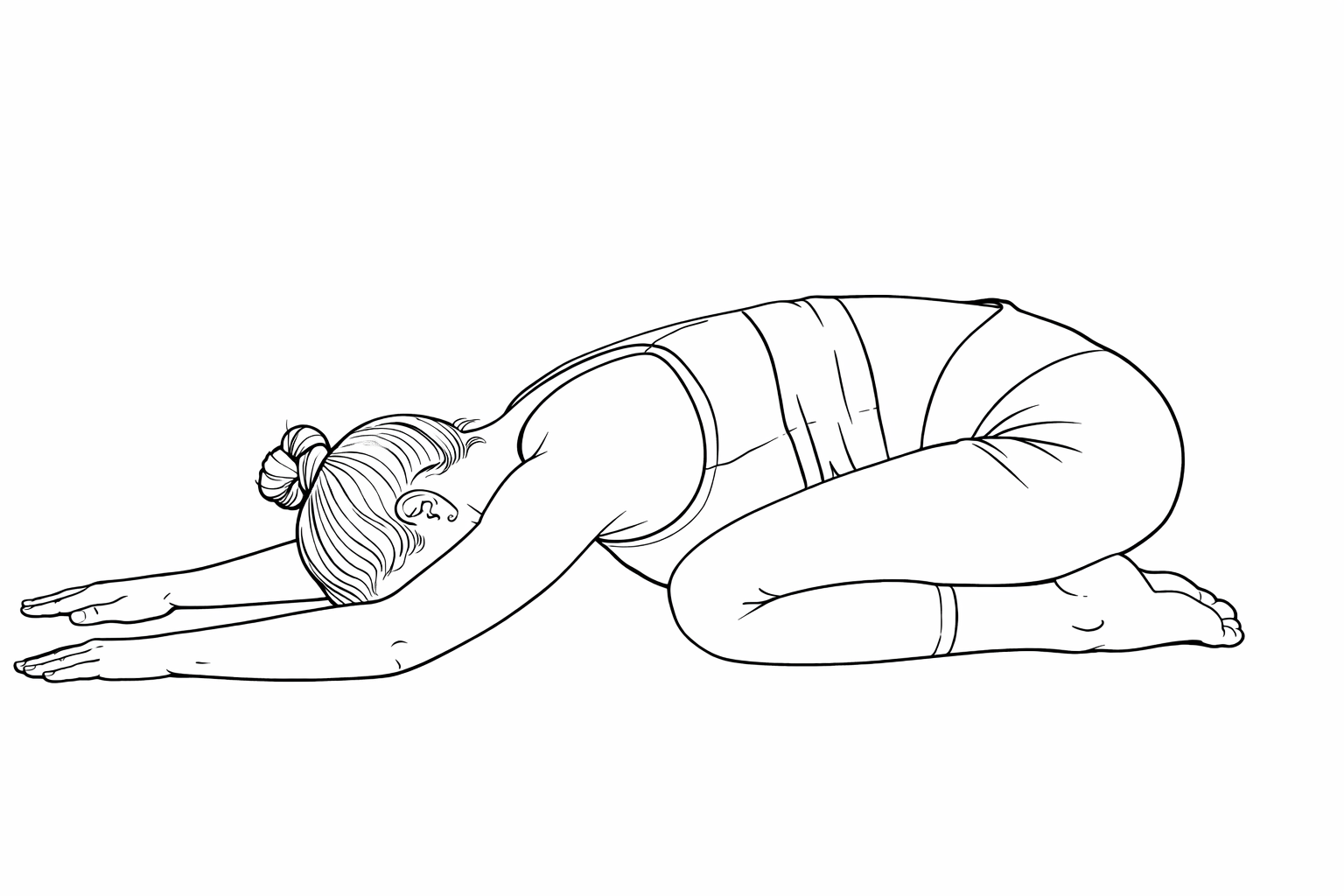
Child’s Pose (Balasana)
How to do it (step by step):
From hands and knees, bring your big toes together, then let your knees separate (as wide as you're comfortable) or keep them closer if that feels better.
Sit your hips back toward your heels.
Walk your hands forward and lower your forehead to the mat (or rest on stacked fists/block).
Let your arms be long in front, or bring them alongside your body, palms up, for a more restful version.
Breathe slowly into your sides and back ribs—feel them gently expand.
Stay for 5–10 slow breaths, then press into your hands to come back up.
Breath cue: Slow, steady breaths into the ribs—expand on the inhale, soften on the exhale.
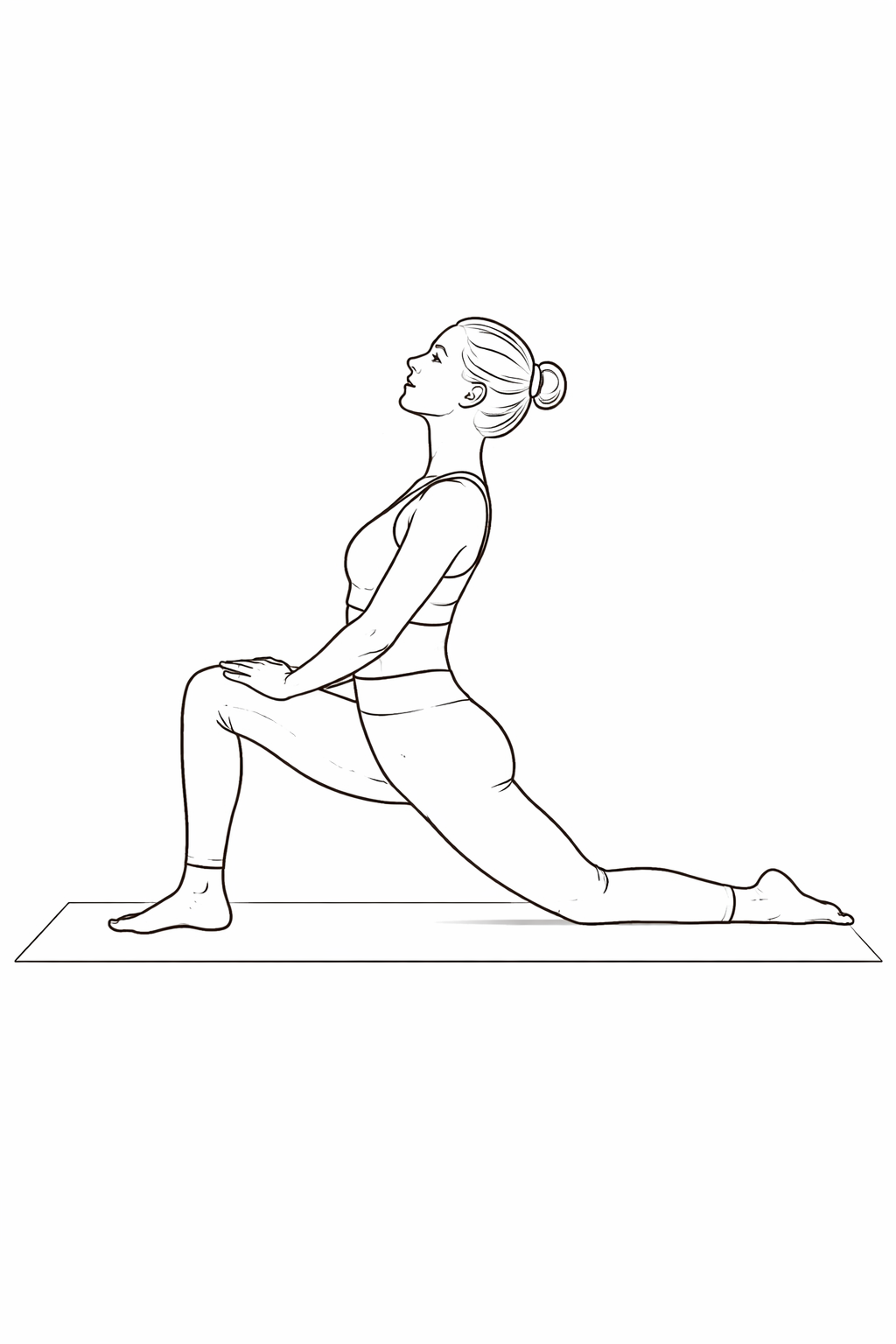
Low Lunge (Anjaneyasana)
Step-by-step
Start in a Downward Dog or Tabletop.
Step your right foot forward between your hands. (Use your hand to help place it if needed.)
Lower your left knee to the mat. Untuck or tuck your back toes—choose what feels steadier.
Slide your right foot forward a touch and let your hips sink forward and down until you feel a stretch in the left hip flexor/front thigh.
Bring your torso upright. Place your hands on your front thigh or hips.
Inhale: lift through your chest, roll your shoulders back and down.
Exhale: soften the ribs and sink into the hips (without collapsing—stay long through the spine).
Optional: reach arms overhead with shoulders relaxed, or keep hands on the thigh for support.
Hold 3–6 slow breaths, then switch sides.
Alignment cues
Front knee stacks over the ankle (avoid the knee drifting far past the toes).
Hips face forward as much as comfortable.
Keep a gentle core tone so your lower back doesn’t dump.
Common fixes
If you feel knee discomfort, place a blanket under the back knee.
If the balance is wobbly, keep your hands on the blocks or on the front thigh.
If you feel low-back pinching: tuck the pelvis slightly (think “tailbone heavy”).
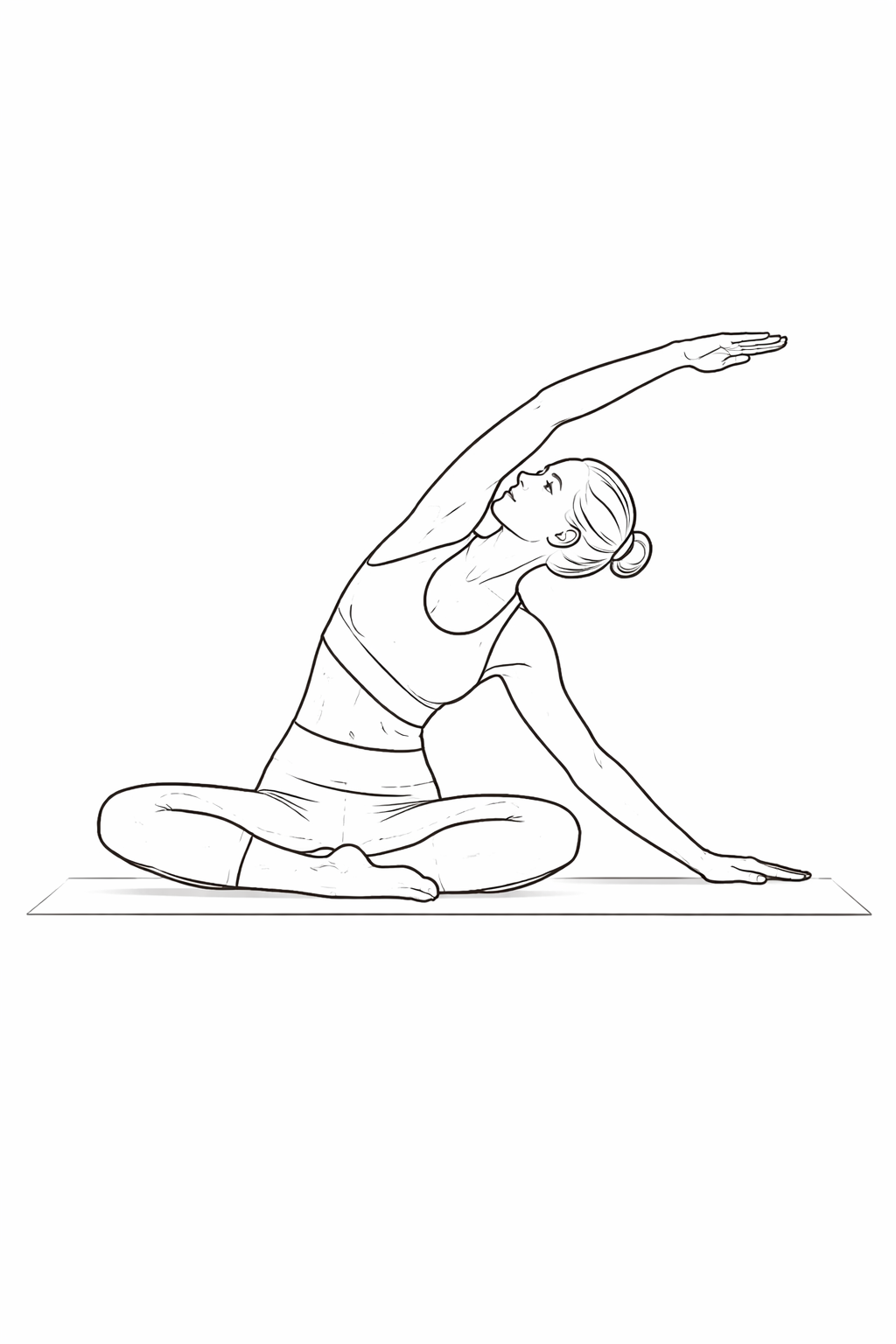
Seated Side Stretch (Seated Side Bend)
Step-by-step
Sit tall on the mat (cross-legged, kneeling, or legs extended—any is fine).
Ground both sit bones. If your hips feel tight, sit on a folded blanket.
Place your left hand on the floor beside you (or on a block).
Inhale: sweep your right arm up alongside your ear, lengthen through your waist.
Exhale: lean gently to the left, reaching the right arm overhead to create a long line from hip to fingertips.
Keep both sit bones grounded—don’t let one pop up.
Stay for 3–5 breaths, then inhale back to center and switch sides.
Breath cues
Inhale: grow taller first.
Exhale: deepen the side stretch (tiny bit more, not forced).
Alignment cues
Keep chest open (avoid folding forward).
Neck relaxed; gaze forward or slightly down.
Common fixes
If the shoulder feels tight, bend the elbow at the top or place the top hand behind your head.
If you’re tipping: widen your base (uncross legs a bit) or use a block under the supporting hand.